
 Ritec partner
Rupture Disks
BS&B is our brand for rupture disks. We take care of sizing, selection, supply, spare parts and service. BS&B →
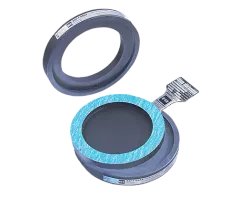
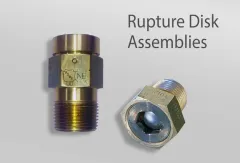
Rupture disks (bursting discs) and safety heads for primary or secondary overpressure protection: reverse-buckling, forward-acting, graphite and sanitary types, vacuum-rated disks, burst sensors and welded disk assemblies.
Also known as: bursting disc, burst disc, safety head, holder, burst indicator, vacuum disk, sanitary disk, graphite disk.
Your request
Add this to your request. We come back with a quotation or the right part.
We will ask for: Burst pressure, Burst temperature, Min–max burst range, Service / medium, Tag number, Serial number.
Models
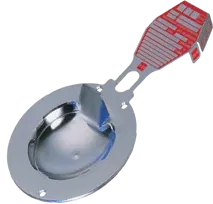
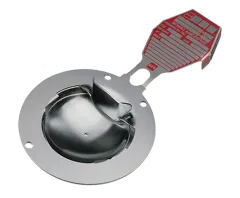
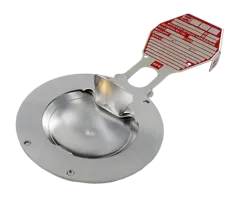
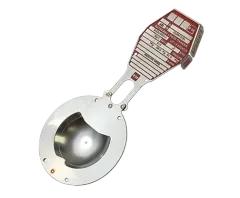
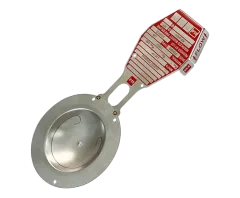
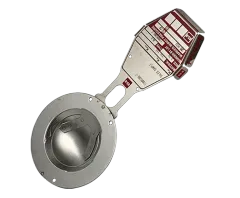
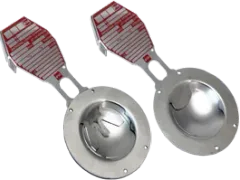
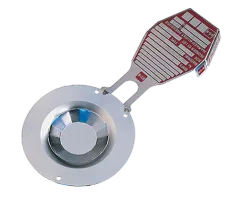
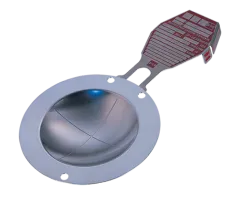
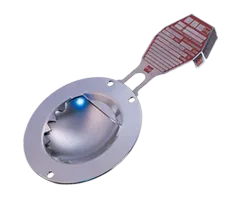
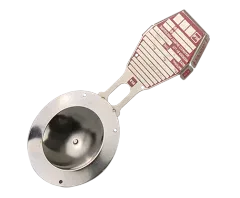
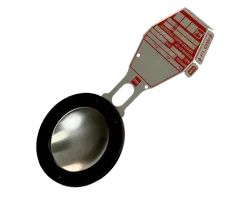
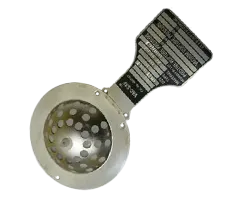
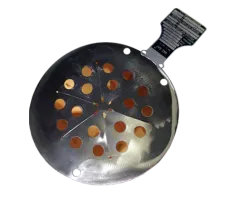
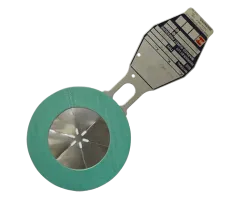
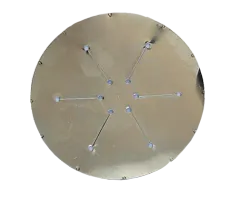
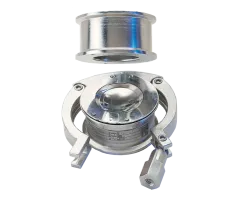
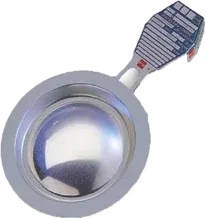
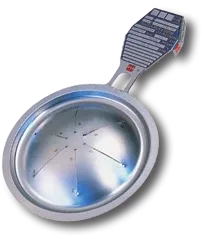
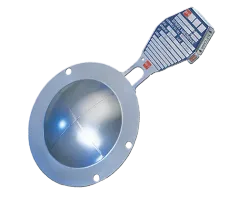
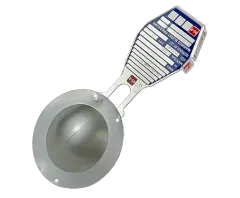
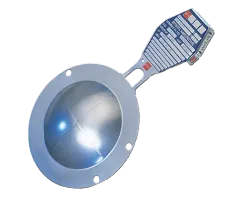
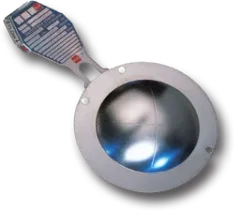
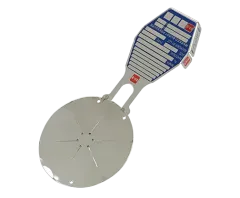

No models match these filters. That does not mean we cannot supply it:
Send us your requirement →Not seeing the size, connection or rating you need? Most of these models are built to order and our suppliers' engineers adapt them. Send us what you have and we work it out. Send us your requirement →
Rupture disks are the simplest and fastest overpressure protection there is: no moving parts, no spring, no leakage in service and a full-bore opening within milliseconds. Ritec represents BS&B Safety Systems, the inventor of the rupture disk, in Belgium and Luxembourg. We calculate the relief capacity, select the disk type and holder, and supply the disks with their certificates.
How a rupture disk works
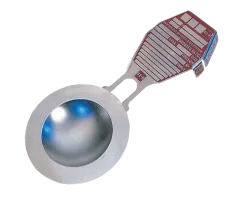
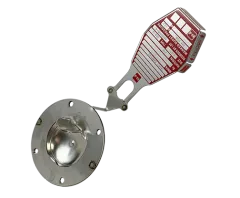
A rupture disk is a calibrated membrane clamped in a safety head (holder) between two flanges. As long as the process pressure stays below the burst pressure, the disk seals the system hermetically. When the burst pressure is reached, within a tolerance of typically ±5 percent, the disk opens and relieves the vessel or line. Because the disk does not reclose, it is mostly used where a rapid pressure rise is possible, where the medium would damage a safety valve, or as an additional device next to a safety valve.
Types of rupture disk
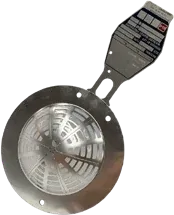
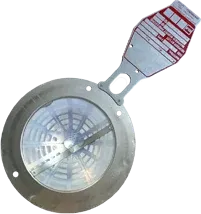
Reverse buckling disks have the dome facing the process and work in compression. They tolerate operating pressures up to 90 to 95 percent of burst pressure, are insensitive to pulsating pressure and vacuum, and do not fragment. This is the standard type for most chemical and petrochemical duties, from 0.3 bar to well over 100 bar.
Forward acting disks have the dome facing away from the process and work in tension. Scored versions reach an operating ratio of 85 percent and suit both gas and liquid service. Conventional forward acting disks are the economical choice for simple duties at higher pressures.
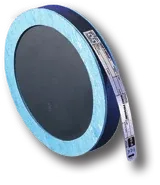
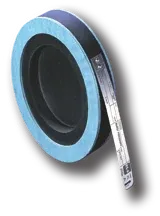
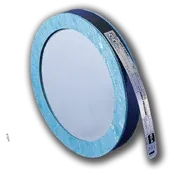
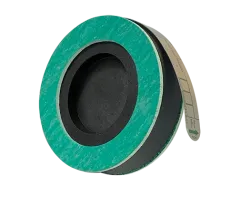
Graphite disks are used for corrosive media and low burst pressures where metal is not suitable. They come as monobloc disks and in armoured versions with a metal support.
Sanitary disks for pharma, biotech and food have a polished surface, tri-clamp connection and withstand CIP and SIP cycles.
Low pressure disks protect tanks, silos and glass equipment from a few tens of millibar upwards.
Safety heads
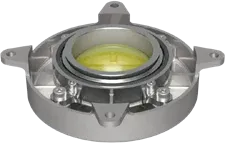
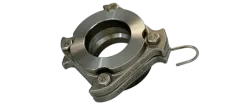
The safety head determines a large part of the accuracy and service life of a disk. BS&B supplies pre-torqued holders, holders with a safety lock against incorrect assembly, and holders with integral knife blades for reverse buckling disks. Holders are available for DIN and ASME flanges, threaded, or as welded assemblies for OEM equipment.
Burst detection
A burst sensor or Burst Alert sensor signals the opening of the disk to the control system so the process can be shut down and the disk replaced. The sensor mounts between the disk and holder and is available in ATEX versions.
Combining a rupture disk with a safety valve
A rupture disk installed under a safety valve isolates the valve from corrosive, sticky or polymerising media, keeps the valve tight in service and extends its maintenance intervals. The space between disk and valve is monitored with a gauge or pressure switch so a pinhole in the disk is detected in time. We size this combination to ISO 4126-3 and API 520.
Standards and certificates
Rupture disks are supplied to ISO 4126-2 and the European Pressure Equipment Directive 2014/68/EU (PED), or to ASME Section VIII with UD stamp. Every delivery includes a certificate with the lot number, the measured burst pressure and the burst temperature.
Frequently asked questions
- What is a rupture disk?
- A rupture disk (also called a bursting disc or burst disc) is a thin metal or graphite membrane mounted in a holder between two flanges. At a predetermined burst pressure the membrane opens and releases the full flow area. It is a non-reclosing overpressure device: after it bursts, the disk has to be replaced.
- When should you choose a rupture disk instead of a safety valve?
- A rupture disk is the better choice for very fast pressure rises, for media that would foul, corrode or stick a safety valve, for very low or very high burst pressures, and where zero leakage in service is required. A safety valve recloses and is preferred where the process must continue after a relief event. The two are often combined: a rupture disk under the safety valve isolates the valve from the process medium.
- What is the difference between reverse buckling and forward acting?
- In a forward acting disk the pressure acts on the concave side of the dome and the material is in tension; the disk bursts when its tensile strength is reached. In a reverse buckling disk the pressure acts on the convex side: the dome snaps over at burst pressure and is opened by knife blades or score lines. Reverse buckling disks tolerate a higher operating pressure (up to 90 to 95 percent of burst pressure), are insensitive to pressure cycling and last longer.
- What does the operating ratio of a rupture disk mean?
- The operating ratio is the maximum operating pressure divided by the nominal burst pressure. A conventional forward acting disk is typically limited to 70 percent of burst pressure, a scored forward acting disk to 85 percent and a reverse buckling disk to 90 to 95 percent. The higher the ratio, the closer the process can run to the burst pressure without shortening disk life.
- What information do you need to select a rupture disk?
- The nominal size and flange rating, the required burst pressure and burst temperature, the maximum operating pressure, the medium (gas, liquid or two-phase), the required relief capacity, the material, and whether vacuum or back pressure can occur. For a replacement, the tag on the existing disk or holder is enough.
- Do rupture disks have to be replaced periodically?
- Yes. The manufacturer recommends a replacement interval based on the disk type and service conditions; in practice disks are usually replaced at every planned shutdown. Reverse buckling disks operating well below their burst pressure achieve the longest intervals.