
BS&B · Rupture Disks
Ritec partnerBS&B Burst Alert sensors
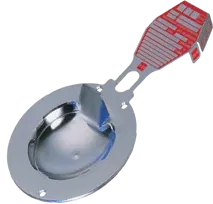
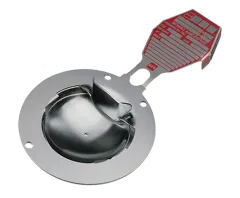
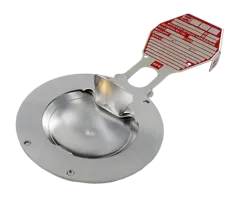
Film sensors that signal a rupture disk burst to the control room instantly: a tantalum conductor on a polyimide or PTFE membrane breaks with the disk. BAS+, KBA, LDAS (burst and leak), DAS, AVB Alert, sanitary SAS and armored versions, for every BS&B disk family.
A rupture disk is silent: when it bursts, nothing on the plant tells you unless you look. Burst Alert sensors close that gap. A thin polymer film carrying a flattened tantalum conductor is clamped in the safety head on the outlet side of the disk. In service the circuit is normally closed; when the disk opens, the flow tears the film and the conductor, the circuit goes open and the control system sees the event within milliseconds. Tantalum is used for corrosion resistance, and “Reconnect Stops” insulate the broken ends so the circuit cannot close again by accident.
Which sensor for which disk
| Sensor | Film | For |
|---|---|---|
| BAS+ / armored ABAS+ | Polyimide | Sta-Saf (Sigma, SKr, LPS, RLS, S-90, JRS, FRS), Sure-Saf CSI, forward acting XN85, XN, XT, XB in NF-7RS / NFI-7RS heads, RB-90, Type B and D |
| EC-Alert | Polyimide | Eco-Saf ECR and variants |
| Graphite Alert (GAS) | Polyimide | Saf-T-Graf MB, IMB, IMBL, RE and armored versions |
| KBA / AKBA | PTFE | Vac-Saf DKB and P/DKB, low-pressure graphite and Eco-Saf disks |
| KBA-S | PTFE | Sanitary Vac-Saf VKB-S, AVB-ST and sanitary Eco-Saf |
| AVB Alert | Polyimide, domed | Vac-Saf AVB only |
| DAS / DASS / ADAS | Polyimide, domed | Large forward acting disks in NX-7R heads, AV atmospheric vent disks, reduced-height heads |
| LDAS / ALDAS | Polyimide | Same disks as BAS+, but detects both burst and leakage; minimum companion burst pressure 7 bar |
| SAS / SLDS | — | Sanitary Bio-Saf GCR, GFR-S and SLP-S; SLDS adds leak detection |
The BAS+ series must not be used in the S90-7R safety head. Each sensor has a minimum coincident pressure below which it may not respond; the catalogue tables list these per size, and we check them for every quotation.
Leak detection
The LDAS family is the standard answer for monitoring the space between a rupture disk and the safety relief valve above it. A leaking disk lets pressure build in that space, which would raise the effective set pressure of the valve. The LDAS responds to that pressure build-up as well as to a burst, so the combination stays reliable.
Installation notes
Operate the sensors with a latching alarm; a conducting liquid may bridge the broken conductor. Back pressure can influence operation, and the LDAS must be sized considering the pressure that can accumulate upstream of it. Every sensor is individually tagged with type, size, flange rating, part number and lot number.
The selection guide also lists a magnetically activated sensor for the SR-7R safety head and for Vent-Saf explosion vents; ask us when a reusable, non-contact sensor is preferred.
Selection data we need
Disk type, size and safety head model, burst pressure, hazardous area classification, whether leak detection is required, cable length and connector type.
Applications
- Remote indication that a rupture disk has burst
- Leak detection in the space between a rupture disk and a safety valve (LDAS)
- Interlocks: stop pumps, close valves, raise an alarm
- Hazardous areas: simple device for intrinsically safe circuits, ATEX