
Vent Silencers
Vent, blow-off and inline silencers for safety valve outlets, boiler start-up, turbine bypass and hydrogen venting: absorbing, diffuser and combined types, dump tubes and micro silencers, sized per flow, pressure and required attenuation.
Also known as: vent silencer, blow-off silencer, blowdown silencer, steam vent silencer, safety valve silencer, diffuser, dump tube, hydrogen silencer.
Your request
Add this to your request. We come back with a quotation or the right part.
We will ask for: Tag number, Serial number.
Brands

Models
Vent silencers4
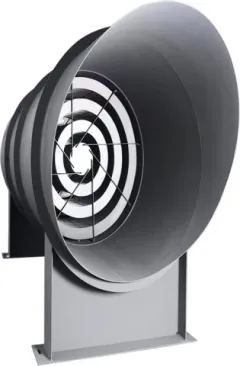
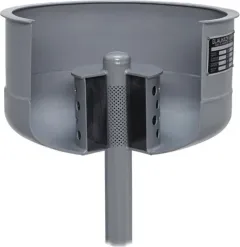
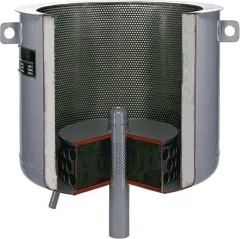
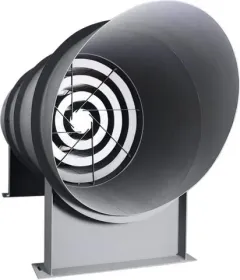
Inline silencers2
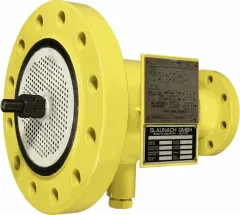
Diffusers and dump tubes4
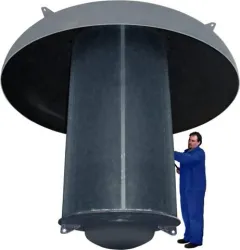
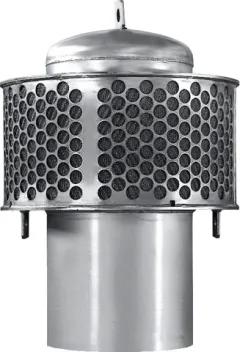
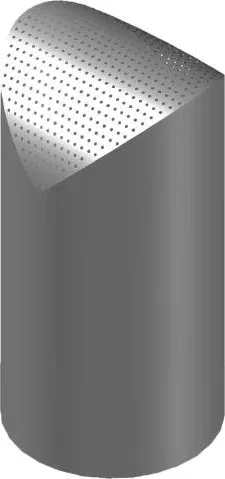
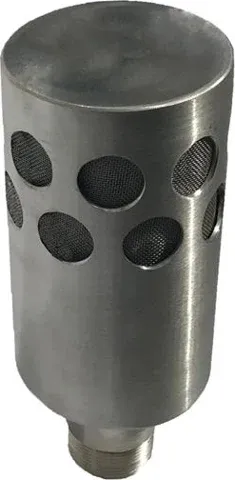
Hydrogen silencers4
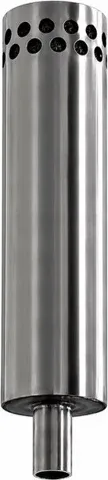
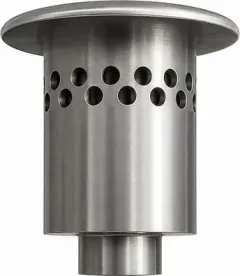
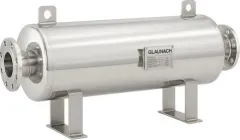
Accessories6
No models match these filters. That does not mean we cannot supply it:
Send us your requirement →Not seeing the size, connection or rating you need? Most of these models are built to order and our suppliers' engineers adapt them. Send us what you have and we work it out. Send us your requirement →
Silencers are needed wherever a gas or steam is released to atmosphere or expanded inside a system at high velocity: safety valve outlets, boiler start-up and purge vents, turbine bypass and condenser dump lines, compressor blow-off, and increasingly hydrogen vents on electrolysers and refuelling stations. Ritec supplies GLAUNACH silencers for these duties and sizes them per application.
Three ways to silence a vent
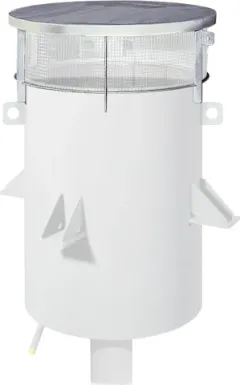
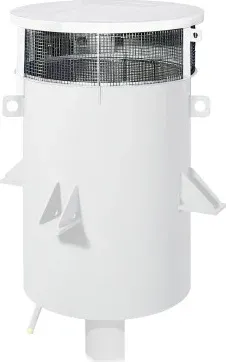
Absorbing silencers (type A) discharge straight to atmosphere with no pressure drop. The gas is spread by a radial diffuser inlet and the noise is absorbed in circular baffle stages lined with mineral wool and glass fabric. Attenuation starts at 25 dB and rises with each added stage.
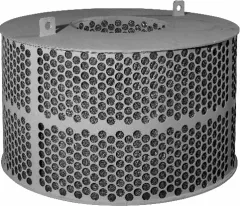
Diffuser silencers (types D and DA) use the pressure that is available anyway. The gas expands through a multitude of small bores into a pack of finely woven stainless steel wire mesh, which breaks the jet noise where it is generated. They reach up to 50 dB in a much smaller and lighter unit, with a pressure drop of at least 0.2 bar.
Combined silencers (type DAA) put both principles in one shell for the strictest limits, 50 dB and more.
Inside the system
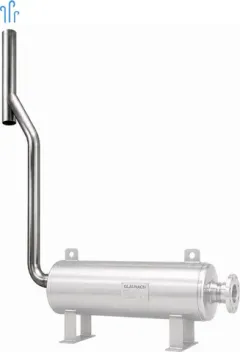
Where the gas must stay in the piping, inline silencers and dump tubes do the same job under pressure: multi-stage diffusers for condenser injection and turbine bypass, fish mouth diffusers for confined spaces and micro silencers for small lines below 10 t/h.
Hydrogen
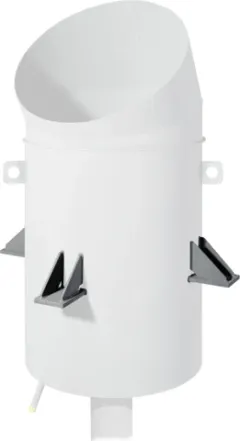
Hydrogen venting is exceptionally loud and carries an ignition risk. GLAUNACH builds dedicated H₂ micro, purge, inline and liquid hydrogen silencers to PED and ASME, with lambda vents and rain caps that direct the discharge upward and keep the hazardous zone within DVGW G 442.
Sizing
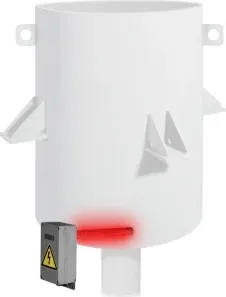
Every silencer is engineered for its duty. Send us the medium, flow, pressures, temperature, allowable back pressure and the noise target, and we return a selection with dimensions, weight and the accessories the site needs: weather hood, bird screen, heater, supports and flanges.
Frequently asked questions
- How loud is an unsilenced steam vent?
- A safety valve or start-up vent discharging steam or gas at high velocity easily reaches 130 to 150 dB(A) close to the outlet. Legal limits at the site boundary are typically 45 to 60 dB(A) at night, so 40 dB or more of attenuation is common.
- What is the difference between an absorbing and a diffuser silencer?
- An absorbing silencer discharges to atmosphere with no pressure drop and absorbs the noise in baffle stages lined with mineral wool. A diffuser silencer uses the available pressure: the gas expands through many small bores into wire mesh, which breaks the jet noise at the source in a smaller and lighter unit, at the cost of a pressure drop of 0.2 bar or more.
- Does the silencer affect the safety valve?
- It can. A diffuser silencer builds up back pressure at the valve outlet, which must stay within the limit for the valve type: around 10 percent of set pressure for conventional spring-loaded valves, more for bellows or pilot-operated valves. We check this when sizing.
- What do you need to size a silencer?
- The medium, mass flow, inlet pressure and temperature, allowable back pressure, inlet size, the required sound pressure level and the distance at which it applies, and the installation situation. From that we select the type, the number of stages and the accessories.