
 Ritec partner
Breather Valves
KITO is our brand for breather valves. We take care of sizing, selection, supply, spare parts and service. KITO →
Pressure/vacuum relief valves and emergency vents for atmospheric and low-pressure storage tanks, weight- or spring-loaded.
Also known as: pressure vacuum valve, PV valve, conservation vent, emergency vent, tank vent.
Your request
Add this to your request. We come back with a quotation or the right part.
We will ask for: Set pressure, Set vacuum, Required capacity, Service / medium, Operating temperature, Tag number.
Models
End-of-line5
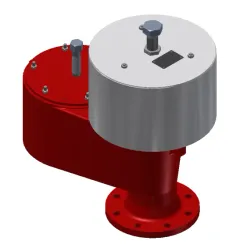
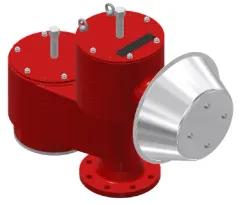
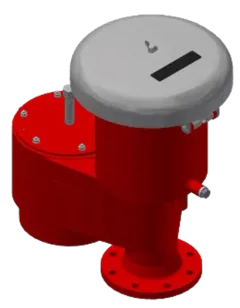
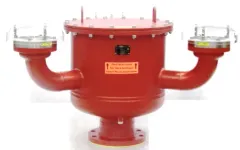
Emergency vent1
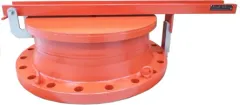
In-line2
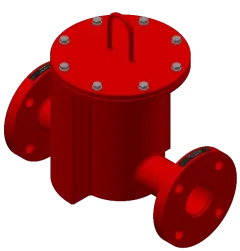
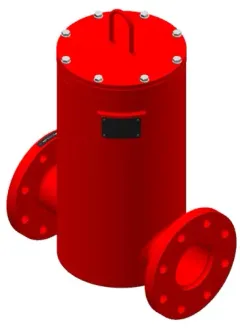
Plastic1
No models match these filters. That does not mean we cannot supply it:
Send us your requirement →Not seeing the size, connection or rating you need? Most of these models are built to order and our suppliers' engineers adapt them. Send us what you have and we work it out. Send us your requirement →
A fixed-roof storage tank is designed for a few tens of millibar of pressure and vacuum. Without a breather valve it would bulge when filled and collapse when emptied. Ritec represents KITO Armaturen for breather valves, emergency vents and flame arresters in Belgium and the Netherlands. We calculate the breathing flows to ISO 28300 and API 2000, select the valve and supply it with its ATEX certificates.
How a pressure/vacuum relief valve works
The valve combines a pressure pallet and a vacuum pallet in one housing. The pressure pallet opens when the tank pressure exceeds the set value, for example during filling or when the sun heats the tank, and lets vapour escape. The vacuum pallet opens during pump-out or cooling and lets air in. In between, the valve stays closed: the tank loses no product and emits no vapour. The pallets are weight-loaded, which gives an accurate, stable setting without springs that can corrode.
Types
End-of-line breather valves mount directly on the tank roof and breathe to atmosphere. They are available without flame arrester for non-flammable products, or with an integrated deflagration flame arrester for flammable products, in versions rated for short-time or endurance burning.
In-line breather valves are installed in the pipework when the tank is connected to a vapour recovery unit, a vent header or a scrubber. They keep the tank closed in normal operation and protect against pressure and vacuum in the line. They are often combined with a detonation flame arrester.
Emergency vents are large weight-loaded covers that handle the fire case. They mount on a separate nozzle or on the manhole and are available up to DN600.
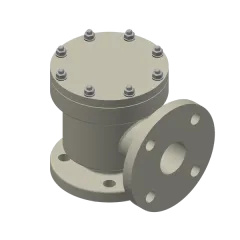
Plastic breather valves protect tanks holding acids, caustics and other corrosive products.
Sizing to ISO 28300 and API 2000
The required capacity depends on the filling rate, the pump-out rate, thermal breathing caused by temperature changes and, for the emergency vent, the heat input during a fire. The allowable pressure and vacuum of the tank determine the setting, keeping enough margin between the set pressure and the opening pressure at which full flow is reached. For nitrogen-blanketed tanks we take the regulator and the maximum nitrogen supply into account.
Accessories
Electrical heating prevents the pallets from freezing and keeps condensate from blocking the flame arrester element. A proximity switch signals valve opening to the control system. Heating jackets, drains and temperature sensors are available for the flame arrester.
Standards and certificates
Breather valves with flame arrester are supplied with EC type examination to ATEX 2014/34/EU and EN ISO 16852. The valves themselves comply with ISO 28300 and API 2000 and come with a test certificate of the setting.
Frequently asked questions
- What does a breather valve do on a storage tank?
- An atmospheric tank breathes: when it is filled or warms up, vapour has to get out; when it is emptied or cools down, air has to get in. A breather valve (pressure/vacuum relief valve or PV valve) allows this within the design limits of the tank and keeps the tank closed the rest of the time, so evaporation losses and emissions stay low.
- What is the difference between a breather valve and an emergency vent?
- The breather valve is sized for normal in- and outbreathing caused by pumping and weather. An emergency vent is a much larger valve that only opens in an emergency, usually a fire around the tank, when vapour generation is many times higher. Under ISO 28300 and API 2000 most tanks with flammable products need both.
- How is a breather valve sized?
- Sizing follows ISO 28300 (formerly API 2000 and the EN 14015 annex). Outbreathing follows from the filling rate and thermal expansion, inbreathing from the pump-out rate and thermal contraction; the fire case determines the emergency vent. From these flows, the allowable pressure and vacuum of the tank and the product properties, the size and setting are selected. We calculate with KITO's KISS sizing program.
- When does a breather valve need a flame arrester?
- When the tank holds a flammable product with a flash point below 60 °C, or a product stored above its flash point, the vapour-air mixture at the outlet can ignite. A breather valve with an integrated deflagration flame arrester stops the flame from entering the tank. For non-flammable products or nitrogen-blanketed tanks a valve without flame arrester is sufficient.
- Weight-loaded or spring-loaded?
- Weight-loaded valves are simple, accurate and low-maintenance and cover settings from a few millibar to about 60 mbar. For higher settings, in-line installation or limited space, spring-loaded valves are used.
- What information do you need?
- The tank volume and dimensions, the allowable pressure and vacuum, the product and its flash point, the maximum filling and pump-out rates, the location (outdoor, indoor, heated), any nitrogen blanketing, the connection size and flange standard, and the accessories required, such as heating or a proximity switch.